
Need vs. Value Will Define the Vikings’ Draft Plan


We’re two weeks away from the NFL Draft on April 23-25, and this is a hectic time for GMs, player personnel execs, scouts, and coaches as the focus has shifted from free agency as the priority to now the draft taking center stage.
At this point in the offseason, free-agent signings trickle in, as teams generally want to see who they draft, then hit the next phase of free agency to fill any perceived holes on the roster heading into upcoming OTAs and minicamps.
The draft room is now the epicenter of activity in NFL team facilities, including for the Vikings in Eagan. I’ve sat in these pre-draft meetings that seemingly go non-stop as the draft approaches. Teams are poring over video from the past two college football seasons, as well as the Senior Bowl, other all-star games, the Combine, and Pro Days.
This is the time when draft boards are being finalized, and teams are doing their own mock drafts to have a better idea of who may be available for a team such as the Vikings at No. 18 in the first round.
Round 1 Could Test the Vikings’ Draft Philosophy
All NFL teams are juggling draft meetings while hosting up to 30 non-local draft-eligible players at team facilities for additional interviews and physical rechecks. There is no restriction on how many local players can do these visits.
For the Vikings and other teams, one of the biggest decisions they’ll make as the draft approaches is how they prioritize their selection process. Will they look at need first and foremost or the proverbial “best player available?”
I learned early in my front office career with the Vikings from our outstanding player personnel department leaders in Jerry Reichow and Frank Gilliam that they never wanted to pass up a potentially great player at a position that was not necessarily an immediate team need to pick a lower rated player at a position of need, especially in the first three rounds (unless we had a franchise quarterback in his prime years in which case we would not take that QB even if he were the highest rated player at the time of our pick).

If there were two players with equal grades and one was in greater need, we would obviously go for the player in greater need. We carried that philosophy through the first three rounds, then looked more closely at the positions we needed to fortify in Round 4 and beyond.
I carried that draft philosophy with me when I became Vikings GM and on into my years as Titans president.
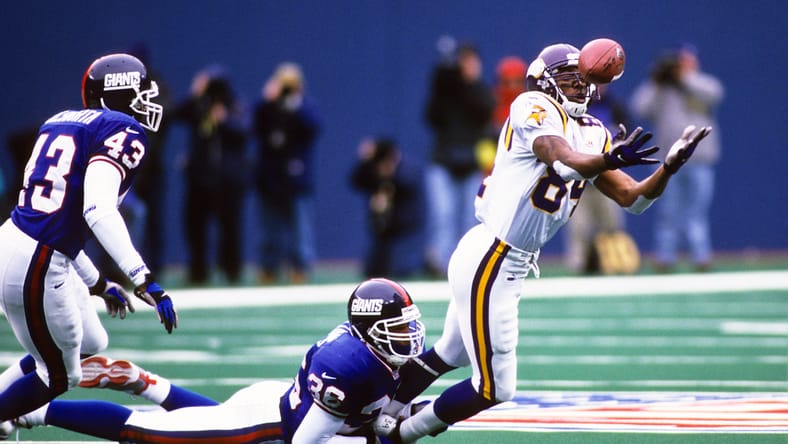
The prime example for me was the case of Randy Moss. As we entered the 1998 draft, our Vikings team was coming off a playoff season in which we won a wild-card game against the Giants before losing in the divisional round to the top-seeded San Francisco 49ers. We had one of the league’s top offenses, and we definitely were thinking defense and a playmaker at any defensive position, but we still talked about not passing up a higher-rated offensive player to go defense in the first round.
Our starting wide receivers in 1997 were future Hall of Famer Cris Carter, who had just made his fifth straight Pro Bowl, and Jake Reed, who had produced four straight seasons with 1,000-plus receiving yards. Wide receiver was a consideration for a potential later-round pick who could compete for the third receiver role.
We had Moss rated as a top-five player in that draft. He surprisingly fell to us at No. 21 in the first round due to some teams having character concerns or feeling he hadn’t faced top competition at Marshall, and others feeling they didn’t need a receiver. We did our due diligence on Moss and had a scout in Conrad Cardano, who had a strong connection with the Marshall coaches who spoke highly of Moss on and off the field.
So we felt confident that he would do well with our team, which had Carter and Reed to help mentor him early on. One of my future players at the Titans—Kevin Dyson—was the first WR picked at No. 16, and at that point, we thought there was a decent chance Moss would be available to us.
We had a group discussion where I again talked about the draft philosophy and that we should take Moss as our highest-rated player (by far at that point) if he were available, which turned out to be the case.
The result was a First-team All-Pro season and Offensive Rookie of the Year award for Moss, who torched the league’s secondaries with 69 receptions for 1,313 yards and a league-leading 17 TD catches. We had a record-setting offense with our three great wide receivers—Moss, Carter, and Reed—almost always on the field in three WR sets. That team went 15-1 and lost in overtime to Atlanta in a heartbreaking NFC title game.
It seems that most teams have now shifted from the “best player available” mindset in the early rounds to picking for need. GMs and coaches are too often playing the short game, thinking they have to win immediately rather than building the best roster for the long haul by drafting the most talented player over the player at a need position.
That seems to have been the case for the Vikings last season, when former GM Kwesi Adofo-Mensah selected guard Donovan Jackson to help shore up an interior offensive line that was a major culprit in allowing 9 sacks of San Darnold in the 2024 wild-card defeat to the Rams.
Perhaps Jackson was the highest-rated player on the Vikings’ draft board at No. 24 overall, but we’ll see over the long haul if there were players passed up who wind up more impactful than Jackson (who had a decent rookie season and appears to be a player on the rise).
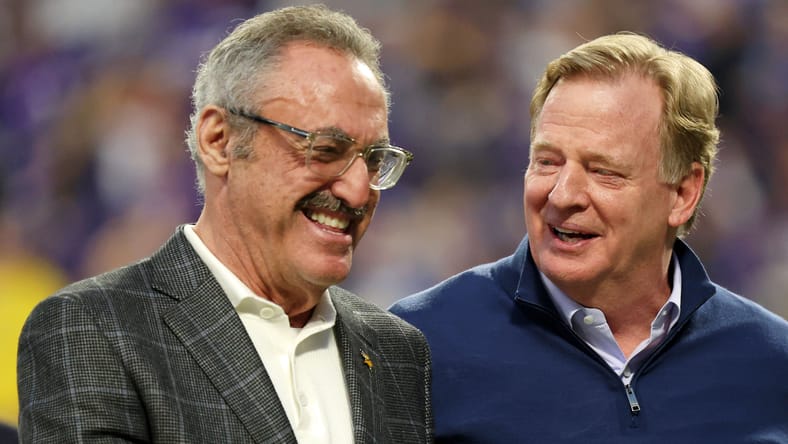
The Vikings enter the upcoming draft with clear needs at center, safety, cornerback, and defensive line, and also need quality depth at wide receiver and running back. They have enough needs that they may be able to pick their highest-rated player at one of those spots.
But what if their highest-rated player is at a position of strength, such as offensive tackle or edge rusher? As the old saying goes, we’ll have to see how it all plays out.
Next week: more draft insight, including my opinion on what positions the Vikings should target round-by-round with their nine picks if the player at a need position is rated equal or better than another position player.

You must be logged in to post a comment.