
Ex-Vikings GM Explains Franchise Tag Crunch Time

In my 20+ years as an NFL exec, I was often asked what I did in the offseason. Many fans, friends, and even some family members assumed I took several months off after the season. They thought I had a schedule similar to the players who were on vacation until offseason workouts in mid to late April, and were surprised when I said the offseason months were my busiest time as a GM or team president.
It always was extremely hectic from January until I had two weeks of vacation in late June and early July before preparing for training camp.
Franchise and Transition Tag Pressure Peaks
Immediately after our final game of the just-completed season—which was usually a playoff game—I met with the coaches to get player grades for the season and discuss team needs in advance of free agency and the draft. I was also in scouting meetings where we were starting to hone in on potential trade and free agency targets, including our own players we wanted to retain and outside free agents we were interested in.
The salary cap was a constant focal point as I considered players likely to be released, asked to stay at a reduced salary, or strong candidates for contract restructures to lower their cap numbers in the upcoming season.
I never had to deal with a $40 million cap shortfall as the Vikings must do by the start of the new league year next month, but there were plenty of years when I had to cut or restructure several players to get under the cap. I also never had $20-30 million increases in the cap from one year to the next, as has been the case the past several years, as NFL revenues have risen significantly.
The period for teams to place franchise or transition tags on top pending free agents opens in mid-February but we were planning on possible moves and I was often in negotiations in January and February to try and sign potential top free agents who were franchise or transition tag candidates as I didn’t want to tie up excessive salary cap space with a tag if it wasn’t necessary.
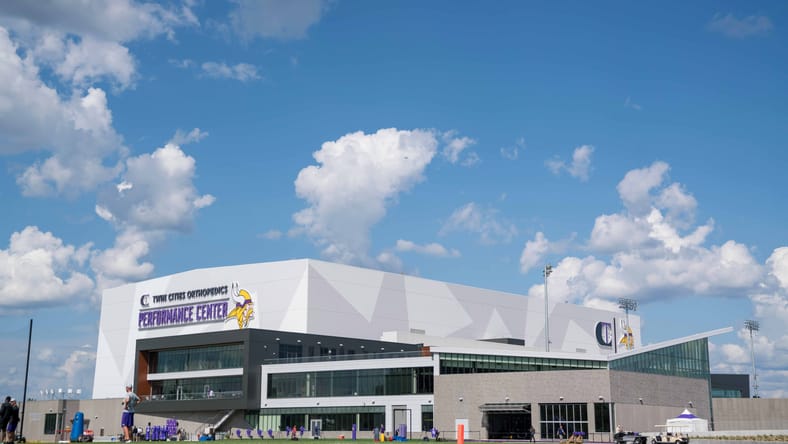
In late January, I would attend the Senior Bowl in Mobile and meet with our coaches and scouts in attendance. Upon returning home, it was an intense period in February of free agency planning and pre-Combine meetings, as is the case this week at Vikings HQ with the Combine coming up next week. At this juncture, we would identify draft-eligible players we wanted to interview at the Combine and players to closely check their physical status if they were coming off injuries, while continuing to update our draft board.
Then it was off to the Combine, where I would watch player workouts, participate in player interviews, and meet with our scouts in between numerous negotiation sessions with agents for our players. There were also discussions with agents on free agents from other teams who were on our radar.
These conversations would involve discussing parameters rather than concrete numbers, since it would technically constitute tampering before the league’s “legal tampering” period, which begins three days before the official start of free agency (those dates are March 9 and March 11 this year).
I’ll talk more in the coming weeks on the Combine, free agency and the draft including who I see as candidates from the current Vikings roster to be released, restructured, extended or re-signed and possible free agent and trade targets including a potential veteran QB to compete with or back up J.J. McCarthy (with rumors continuing on a possible Kirk Cousins return to Minnesota).
Around the NFL–Franchise/transition tag period
The two-week window for teams to apply franchise or transition tags to players opened on Monday and runs through March 3. The tags consist of a one-year tender associated with the franchise tag (basically the average of top five cap hits at a position or 120% of the previous salary and the old team retains a right of first refusal and receives two first-round picks if a player signs elsewhere unless it’s the exclusive franchise tag that is more costly) or transition tag (average of top 10 salaries; old team retains right of first refusal and no draft choice compensation if he signs elsewhere).

It’s highly unlikely the Vikings will utilize either tag for any of their 14 pending unrestricted free agents. The Vikings’ best free agents-to-be are No. 3 WR Jalen Nailor ($960,000 salary last season; projected franchise tag $28.8 million; projected transition tag $25 million) and starting LB Eric Wilson ($2.6 million salary in 2025; $28.2 million franchise tag, $23.6 million transition tag). Punter/holder Ryan Wright is another key pending free agent, but the Vikings are not going to tag him at $6 million-plus when the league’s highest-paid punter (Seattle’s Michael Dickson) is making $4 million per year.
Around the league, the top candidates to be hit with the franchise tag include:
George Pickens (Cowboys WR, 93 receptions for 1,429 yards and nine TDs last season, $28.8 million franchise tag, $25 million transition tag);
Daniel Jones (Colts QB, 8-5 record in his 13 starts before tearing his Achilles, career-best 100.2 passer rating, which ranked ninth, franchise tag a pricey $47 million, transition tag would be an estimated $41 million);
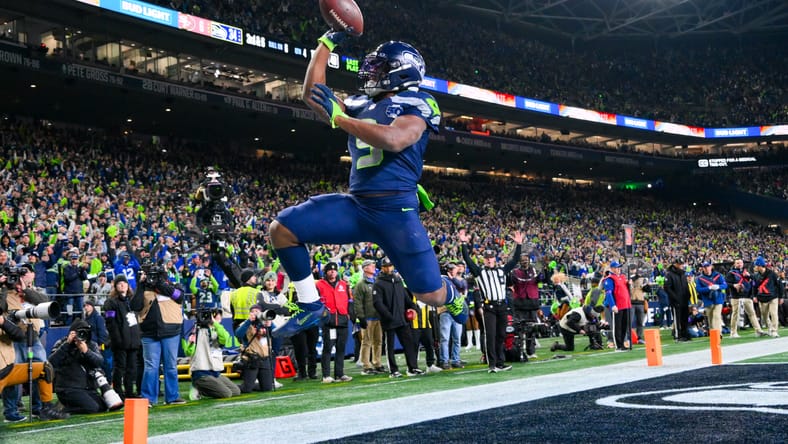
Kenneth Walker III (Seahawks RB, Super Bowl MVP after 135 yards rushing, 1,340 rushing yards last season, including playoffs; despite the relatively inexpensive $14 million RB franchise tag, Seattle is rumored not to be planning to place the franchise tag on him, perhaps they’ll use the transition tag at $11.7 million);
Trey Hendrickson (Bengals DE, only four sacks in seven games in an injury-hampered 2025 season, but he led the league with 17.5 sacks in 2024, $27.3 million franchise amount, and $22.9 million for transition);
Kyle Pitts (Falcons TE, 88 catches for 928 yards and five TDs in 2025, $16.3 million—franchise tag, $13.9 million transition tag);
Breece Hall (Jets RB, 1,065 rushing yards plus 350 receiving yards with five total TDs for a lousy Jets offense last season).

You must be logged in to post a comment.