
Our Favorite Transactions of the Vikings’ Offseason


The Minnesota Vikings will have ancillary signings between now and the start of the regular season, but the main roster is pretty well set. So, VikingsTerritory is here to exalt its favorite moves of the club’s offseason.
Minnesota’s splashier moves own the headline, but some quieter additions may stabilize the roster.
The offseason wasn’t quite as busy as usual due to big spending in 2024 and 2025, but enough transactions moved the needle to matter.
Why Minnesota’s Offseason Blueprint Looks Stronger Than Last Year
Ranked in ascending order, here’s the list (No. 1 = our favorite offseason transaction).

5. Drafting Jake Golday (LB) and Domonique Orange (NT)
Golday, the Vikings’ 2nd-Rounder last month, may not play full-time snaps as a rookie, but that is okay. Minnesota suddenly has plenty of linebacking depth with Blake Cashman, Eric Wilson, and Ivan Pace Jr. all back for 2026. Golday adds versatility inside Brian Flores’s offense, enough that Flores could deploy him as an EDGE rusher as he sees fit. A current glance at the current EDGE situation in Minnesota reveals that Flores might need an OLB3. Golday could be prime for that task.
On Orange, the new nose tackle from Iowa State, the Vikings haven’t employed a true big-bodied NT since Linval Joseph, and he left town six years ago. It’s never made much sense why Mike Zimmer, Kevin O’Connell, and Flores deprioritized run-stuffers, instead signing players like Shamar Stephen, Armon Watts, and Jonathan Bullard to help at DT.
Nose tackles are usually pretty easy to identify and scout; knocking the Orange pick out of the park from the draft feels like a safe bet. In three years, barring a strange spat with injuries or something similar, fans will not look back on the Orange selection and grimace. They’ve done that a lot lately with drafts since 2022.
4. Hiring Frank Smith
For four years under Mike McDaniel, Smith served as the Dolphins’ offensive coordinator, even overseeing the 70-point game against the Denver Broncos in September 2023. Along the way, he also empowered running back De’Von Achane, enabling the speed demon to morph into one of the NFL’s best. Coming out of college, Achane was considered a decent prospect, not a slam dunk like Bijan Robinson or Jeremiyah Love.
Well, in 2026, once and for all, the Vikings must fix their rushing offense. They basically need to run the ball more, even if there’s a temptation to throw it 40-50 times per game.
Having Smith in O’Connell’s ear should steer the ship that way. Minnesota also drafted Wake Forest’s Demond Claiborne, who has an eerily similar skill set and size to Achane.
3. Signing James Pierre (CB)
Pierre was Minnesota’s primary cornerback acquisition this offseason, and for good reason.
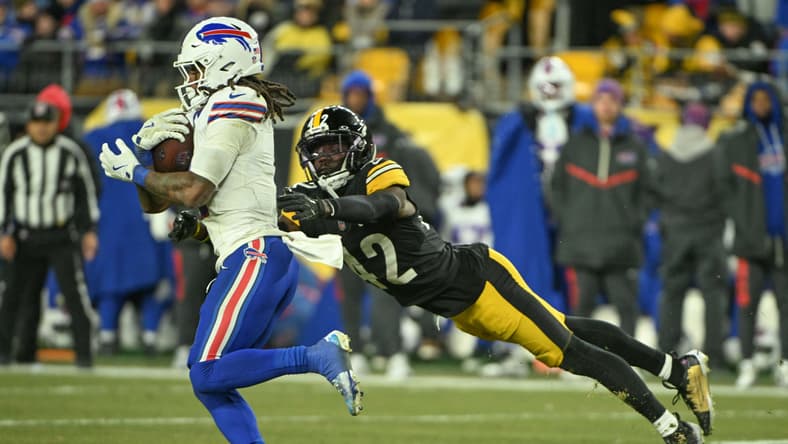
Last year, he played just under 400 defensive snaps and earned an impressive 86.8 Pro Football Focus grade, immediately making him a strong candidate for the Vikings’ third cornerback spot this season. His six seasons of experience under Mike Tomlin in Pittsburgh provide significant veteran depth for a defense behind Byron Murphy Jr. and Isaiah Rodgers.
Pierre’s true value isn’t in becoming a superstar; it’s in being a dependable third corner for Flores. He needs to hold his own outside, tackle effectively, avoid coverage busts, and ensure the secondary runs smoothly, especially if injuries arise. Based on his performance last season, he is fully capable of meeting those expectations. Should Murphy Jr. or Rodgers miss time this fall, Pierre offers the Vikings a crucial safety net, preventing a full-blown panic.
Heading into 2025, the Vikings were content with Jeff Okudah as the CB3. They seem more serious in 2026. Pierre is the proof.
2. Signing Jauan Jennings
What if Jordan Addison runs into legal trouble or misses time with an injury? Before Jennings’ arrival, Minnesota’s backup plan looked precariously thin.
The Vikings would have leaned even harder on Justin Jefferson and asked Tai Felton to step directly into WR2 duties as a rookie. While Felton certainly has the potential to become a legitimate NFL receiver, Minnesota’s actions last year showed a clear intent to avoid rushing him into anything. The team carefully managed his development, refraining from placing too much responsibility on his shoulders. He was a special teamer.
The wide receiver room without Addison would have looked like this sans Jennings:
- Justin Jefferson
- Tai Felton
- Myles Price
- Jeshaun Jones
That WR depth chart is concerning for a team with serious playoff ambitions. Jennings changes everything. He provides the Vikings with a more solid, mid-tier receiver, protects them if Addison gets in trouble, and prevents Felton from being forced into a role before he’s truly ready.
The Vikings may have their best 1-2-3 wide receiver combo since 2002.
1. Signing Kyler Murray (QB)
This one takes the cake. It just does. When Murray is healthy, he tosses almost 4,000 passing yards per 17 starts, scores 30 total touchdowns, and rushes for almost 600 more yards. All of that production? The Vikings secured it for $1.3 million, as Murray is playing on the Arizona Cardinals‘ dime.

There is a very real chance that Murray clicks in Minnesota and becomes the team’s QB1 through his 30s. If so, falling into the Vikings’ lap because of the Cardinals’ buffoonery will be an all-time tale in Vikings lore.

You must be logged in to post a comment.