
Mel Kiper Locks in Vikings Draft Prediction

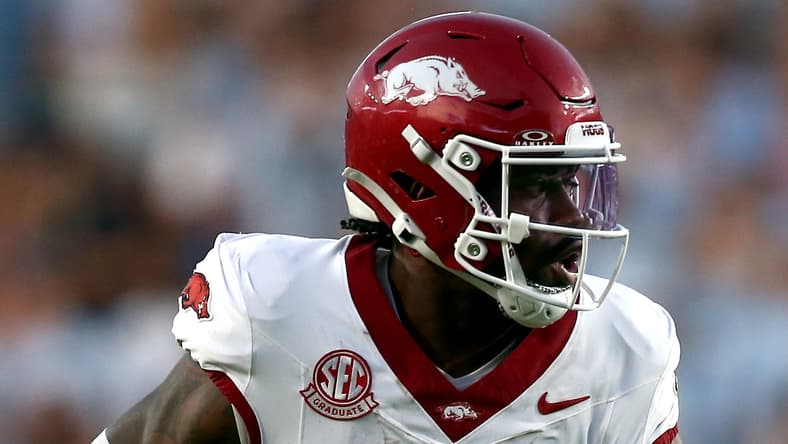
The Minnesota Vikings will announce their 1st-Round pick in exactly one week, and according to ESPN’s Mel Kiper, that man will be Dillon Thieneman, a safety from Oregon, followed by Arkansas running back Mike Washington Jr. in Round 2.
Kiper sees Minnesota attacking safety first and RB later.
The longtime draft analyst locked in his official predictions this week, with Minnesota getting a splash of offense and defense.
Thieneman Has Become the Legit Round 1 Option
Kiper isn’t the most accurate mock-drafter, but generally speaking, he knows his stuff.
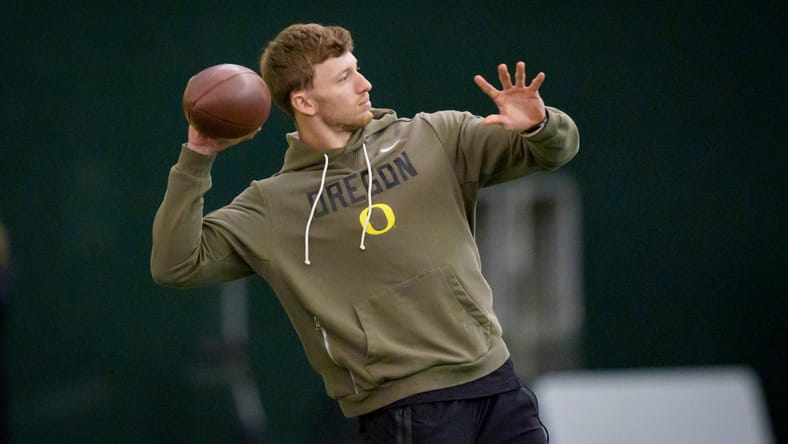
Kiper: Thieneman to MIN in Round 1
Kiper towed the industry line in his final set of predictions; everyone thinks Thieneman will be a Viking.
He explained, “Along with many evaluators, I’ve been projecting Thieneman to Minnesota since before the combine. There’s still uncertainty around Harrison Smith’s status, but it’s sort of irrelevant because the Vikings have to start planning for the future at safety whether or not Smith is back there in 2026.”
“Defensive coordinator Brian Flores would have Thieneman lined up all over the place to create havoc. He can create turnovers (eight career interceptions), too.”
Kiper’s first mock in January connected LSU cornerback Mansoor Delane to Minnesota, and then Thieneman one month ago. He’s sticking with the Duck to the Twin Cities.
A Formality by Now?
Thieneman straight cooked at the Combine in February. He has the size and flexibility NFL teams seek in a safety. At 6’0″ and 200 pounds, he can play single-high or near the line of scrimmage, giving defensive coordinators numerous options.
His performance at the Combine significantly improved his draft stock. He ran a 4.35-second forty-yard dash, posted a 41-inch vertical jump, and demonstrated fluid backpedal mechanics in drills.
Before the Combine, Thieneman was projected as a 2nd-Round pick; afterward, he began appearing in 1st-Round mock drafts. Ultimately, Thieneman’s impressive week in Indianapolis could be the reason he is selected early in the draft.
It’s also worth noting that Smith’s status — to retire or return — is largely irrelevant to the draft. Every draft should be about preparing for two, three, and four seasons later. Thieneman crossing paths with Smith if returns can merely be a perk.
Washington Jr. in Round 2
After Thieneman to Minnesota, Kiper ventured into Round 2. He predicted Washington Jr. and wrote, “Aaron Jones Sr. and Jordan Mason are on expiring deals, and Washington’s 4.33 speed would add another element to the offense (which also now features Kyler Murray’s mobility under center). Washington ran for 1,070 yards and eight touchdowns last season, and he added 28 catches out of the backfield.”
Washington Jr. is 6’1″ and 225 pounds, somehow featuring 4.33 speed. Those are akin to Saquon Barkley’s measureables, and like Thieneman, Washington Jr.’s Combine showing changed everything for him. He runs downhill and finishes like a beast on runs.
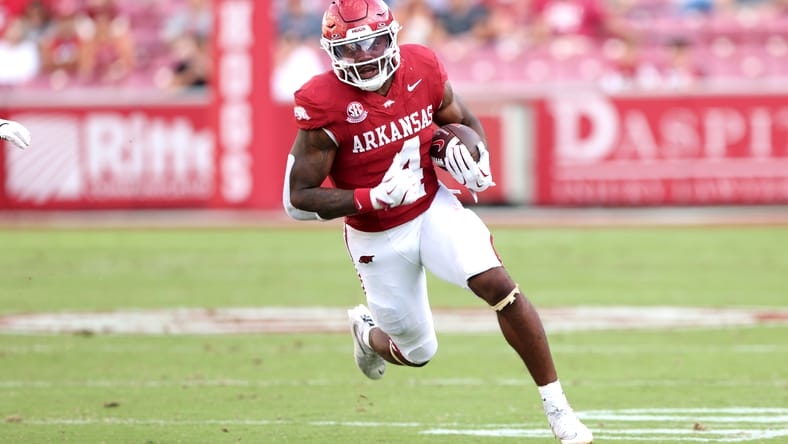
Weaknesses? His ball security isn’t ideal, and he is not known for pass protection, which is usually a prerequisite for Vikings skipper Kevin O’Connell.
The Athletic‘s Dane Brugler on Washington Jr.: “Washington is a good-sized athlete who gets through the crease and can be a punisher behind his pads, although he will need to improve his third-down skills to increase his NFL value.
“Washington has an impressive-looking physique and the downhill burst that generally makes tackling him high a bad idea for defenders. Despite some stiffness in his lower half, he is quick to read, collect his feet and cut away from pursuit with speed to finish.”
Snapping a Young RB Drought
The Vikings haven’t picked a halfback in the draft’s early rounds since Alexander Mattison — seven years ago. Minnesota must also fully commit to its ground game. While the rushing attack has steadily improved each season under O’Connell, it has yet to become a true cornerstone of the offense.
This year-over-year improvement is evident in the Vikings’ rushing DVOA ranking, which climbed from 27th in both 2022 and 2023 to 20th in 2024 and finally to 13th in 2025. This represents significant progress each year — with one caveat.
Despite the improvement, there’s still room to grow. Last season, Minnesota ranked 13th in rushing efficiency but only ran the ball on 43% of its plays, placing it 19th in the league. Essentially, the Vikings achieved a top-13 rushing product despite operating with a bottom-13 rushing rate.
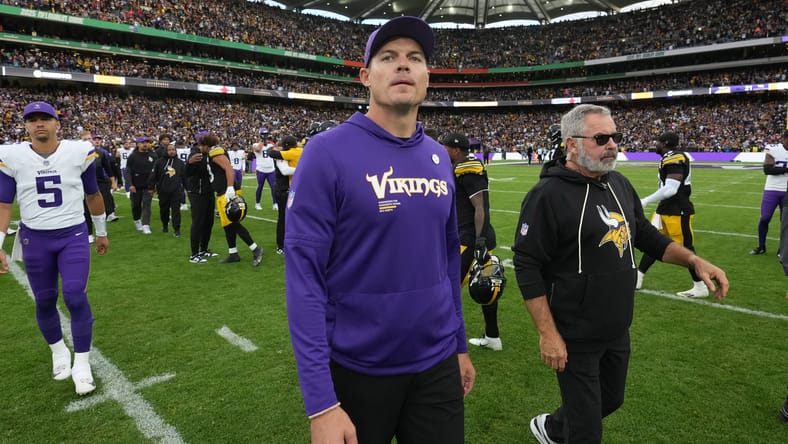
The disparity should signal change. The reasoning is straightforward: injecting fresh talent and energy could encourage the offense to embrace the run game more frequently and with greater diversity.
For Kiper, that’s Washington Jr. in Round 2.

You must be logged in to post a comment.